Welcome
- Explain, in plain language, what this program is and what it is not — and why "you're not broken, you just need better tools" is the whole idea.
- Describe how the program works: the assessment that comes first, the daily rhythm, and the role of practice.
- State realistically what the program will and won't do for you (it won't make you never get angry — and that's on purpose).
- Make a clear, personal commitment to the four things that make this work, no matter what brought you here.
- Know exactly what to do if you're ever in crisis, before you go any further.
1 · Welcome. I'm Glad You're Here.

Welcome. I'm Whitney Rudkin, and I'll be your guide through this program.
Here's a little about why you should listen to me: I've spent over three decades in criminal justice, teaching, and now anger-management education. I've worked with people at their worst moments — fifteen-year-olds who'd been kicked out of school, fifty-year-old executives who were told to get help or lose their jobs, and a whole lot of people in between. I've seen what uncontrolled anger does to lives, families, and communities. And I've seen the other thing too: the genuine transformation that happens when people finally learn to understand and handle their anger.
So let me be real with you for a hot minute. This is not one of those feel-good, "just think positive thoughts" programs. This is practical, evidence-based material that's been tested in the trenches with real people facing real challenges — including plenty who showed up kicking and screaming because a judge suggested they needed help with their "communication skills."
And whether you're here by court order, because someone you love insisted on it, or because you finally woke up one day and thought "there has to be a better way to handle this" — you've made a wise choice. Anger management isn't about becoming numb, and it isn't about letting people walk all over you. It's about becoming more powerful, more effective, and more in control of your life.
Let's get started.
2 · You're Not Broken. You Just Need Better Tools.
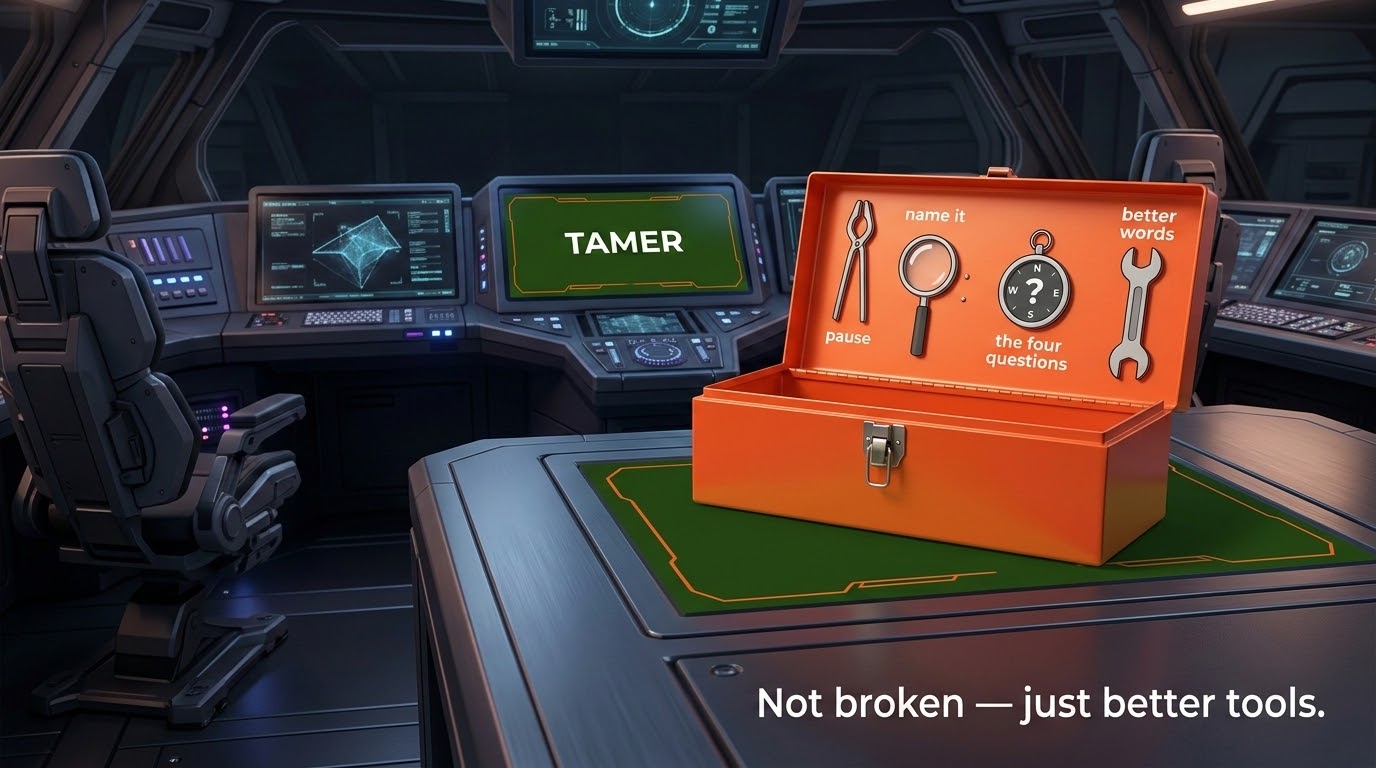
Let me tell you the single most important thing I've learned in all these years, because it changes how you'll hear everything else:
You're not broken. You just need better tools.
Think about it this way. If you were trying to fix a car with a hammer, you'd probably make things worse — right? That's not because you're a bad person or "beyond help." You just had the wrong tool for the job.
That's what this program is: a complete toolbox for handling anger. Some tools will work better for you than others — that's normal, and that's the point. My job is to give you options, so you can find what actually works for your life, your triggers, your situation.
And here's something the old course said that I want you to hold onto: the way you handle anger right now was taught to you. You learned it — usually young, usually from the people who raised you. The good news hides right inside that fact: if you learned one way of handling anger, you can learn another. Anger itself is natural and unavoidable. But what you do with those hot emotions is, with some practice, completely under your control.
3 · How This Program Actually Works
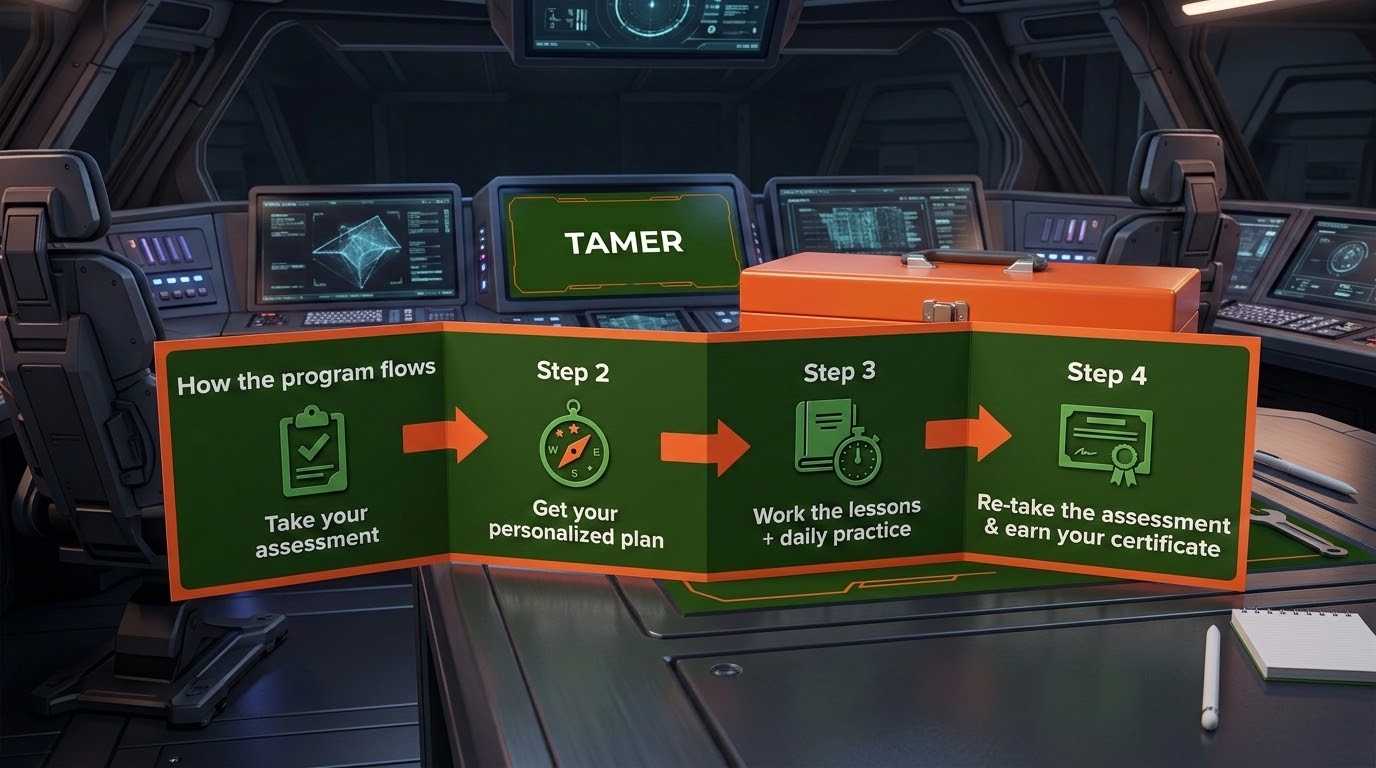
Most programs are designed to get you through a requirement and check a box. That's not enough. Real change requires understanding why you get angry, what triggers you, how your brain and body respond — and then practicing better responses until they become automatic.
So we go deeper than "count to ten and walk away." Those basics might help in the moment, but they don't touch why you got angry in the first place, or how to keep it from happening again. Across this program you'll learn:
- The actual science of what happens in your brain and body when you get angry (it's not what you think).
- How to spot your own personal warning signs before you hit the point of no return.
- Specific techniques for different situations — because what works at home may not work at your job.
- How patterns from your childhood show up in your anger today.
- Real communication skills that resolve conflicts instead of making them worse.
We also use cognitive-based skills, evidence-based training methods, and guided relaxation techniques to help you retrain and recondition the thoughts and behaviors that got you here — so the end result is a calmer, more pleasant life.
A few things I recommend, starting today:
- Set aside 20–30 minutes to work through the material at a steady pace.
- Actually do the exercises — they're not optional. Reading alone won't rewire a habit.
- Keep an anger log from Day 1 (the program will show you how).
- Practice the techniques when you're calm, so they're available to you when you're not.
- Be patient with yourself. Changing patterns that took years to build doesn't happen overnight.
4 · First Stop: Your Assessment
Before we build any skills, we start by figuring out exactly where you are — because you can't change what you haven't honestly looked at.
So the program begins with a short assessment called the Comprehensive Anger Assessment and Analysis Profile – Short Form (CAAAP-56). A few things to know about it:
- It is not part of your course grade. You can't pass or fail it, and there are no right or wrong answers.
- Its only job is to target the specific areas tied to your anger, so the rest of your program is built around you instead of one-size-fits-nobody.
- You'll take this same assessment again after you finish the program, so you can see — in black and white — how much you've changed.
When you take it: find a quiet space, answer based on the last few months (not ancient history), don't overthink it (your first instinct is usually right), and above all, be honest — this is for your benefit, not anyone else's.
Your results will point to patterns you may never have recognized in yourself. Some of them might surprise you — that's normal, and it's valuable. The goal isn't to judge yourself. It's to understand yourself. That understanding is the foundation everything else is built on.
5 · What I Can (and Can't) Promise You
Let me set honest expectations, because I won't sell you something I can't deliver.
I am not going to promise you'll never get angry again. That's not realistic, and it's not even healthy — anger alerts you to problems, motivates you to act, and helps you stand up for yourself and the people you love. A program that tried to delete your anger would be doing you harm.
Here's what I can promise. If you do the work, you will:
- Understand your anger in a way you never have before.
- Have specific tools for managing anger when it shows up.
- Communicate better during conflict.
- Feel more in control of your responses.
- Reduce the damage anger has been causing in your life.
Some people notice changes within the first week. For others it takes longer. Don't compare your progress to anyone else's — this isn't a race.
6 · Your Commitment
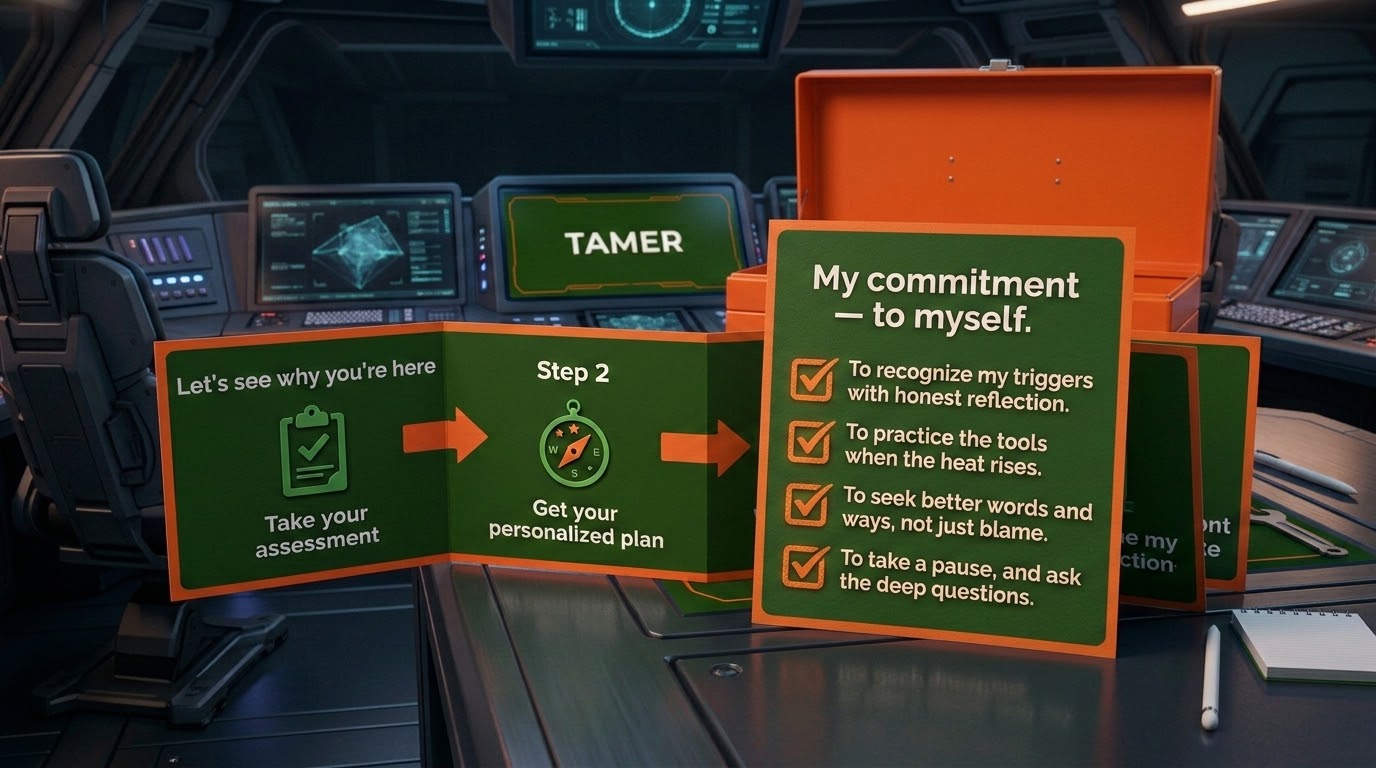
Before we go any further, I need you to make a commitment. Not to me — to yourself. It comes down to four things. Are you willing to:
- Be honest about your anger patterns, even when it's uncomfortable?
- Try techniques that might feel awkward at first?
- Practice new responses even when your old ones feel more natural?
- Stick with it even when you have setbacks?
If you can commit to those four things, this program will help you. If you're not ready for that level of commitment yet, that's okay too — but real change requires real effort, and there's no point pretending otherwise.
One more honest word, especially if you're here because a judge told you to be. Nobody likes being told they have to do something. But here's what I've learned from working with hundreds of court-involved students: the people who get the most out of this aren't always the ones who wanted to be here. They're the ones who decided to make it worth their time. You're going to spend the hours anyway — you might as well walk out with something that changes your life. Some of my biggest success stories started exactly where you might be sitting right now.
7 · Before You Begin: A Word on Safety
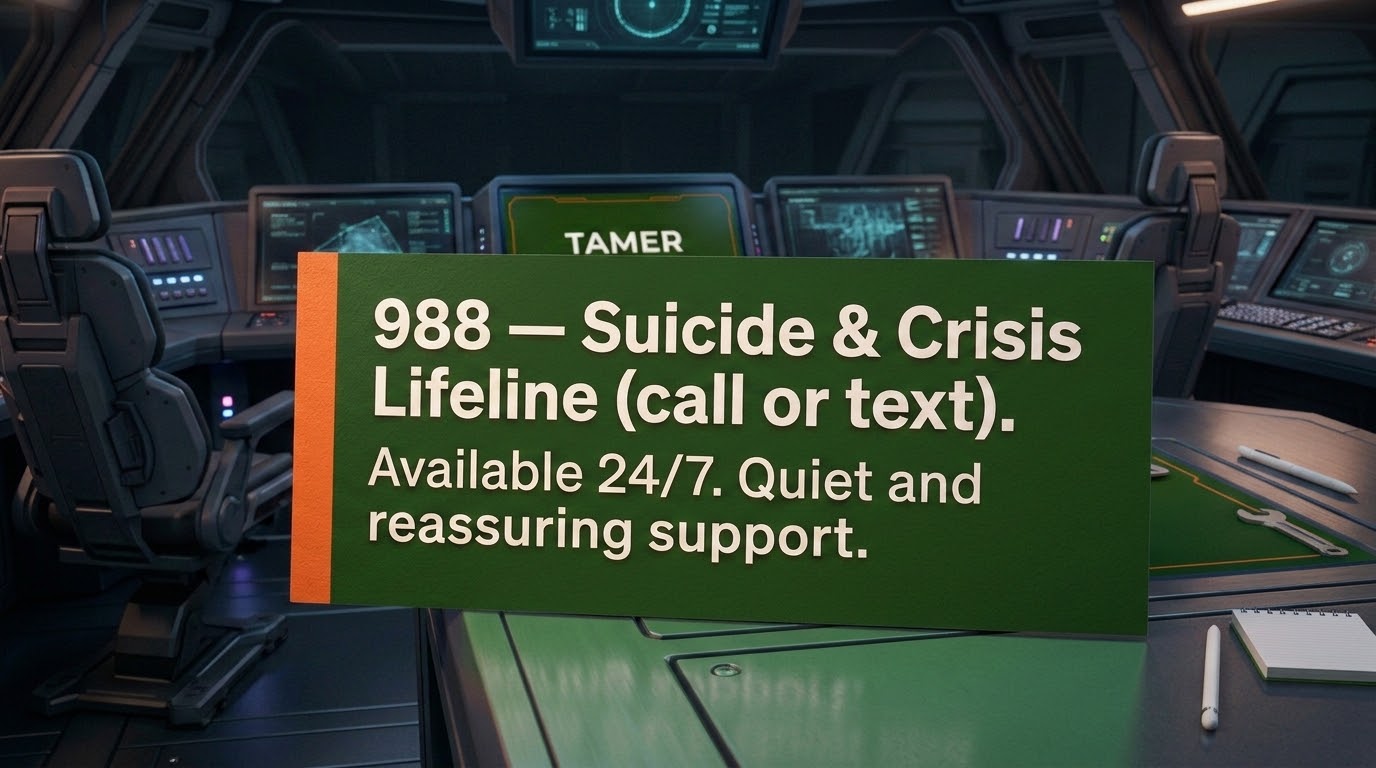
Please read this before going further.
This program is a tool for people who want to handle their anger better. It is not a crisis service. If you are having thoughts of hurting yourself or someone else, stop here and get help right now. In the U.S., call or text 988 (the Suicide & Crisis Lifeline), or go to your nearest emergency room. Your safety comes first — the program will be here when you're ready.
8 · Ready? Let's Go.
If you're still with me, your relationship with anger is about to change. Here's the path from here: you'll take your CAAAP-56 assessment, you'll get a plan built around your results, you'll work through the lessons with a little daily practice, and at the end you'll re-take the assessment and see how far you've come.
So let's hop on over to your assessment — and let's see why you're here.
Knowledge Check
Your knowledge check for this lesson is an interactive game you'll play inside the course — it's built right into the next step. Keep going and you'll find it waiting for you.